
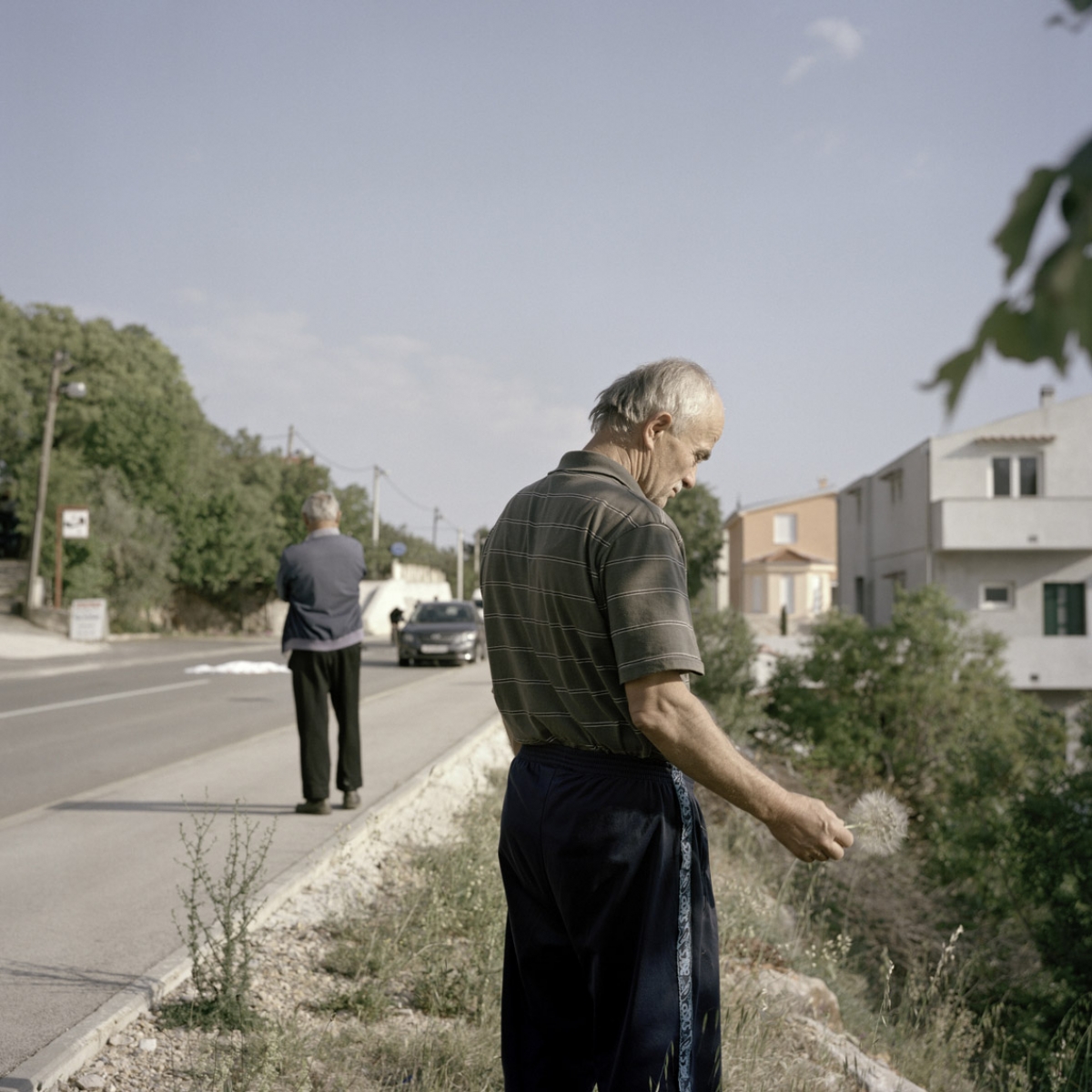
Draga Jurišić, an Irish based artist, will present her well known work YU: Lost country in the new Gallery AMZ of the Archeological Museum
Yugoslavia fell apart in 1991. With the disappearance of the country, at least one million five hundred thousand Yugoslavs vanished, like the citizens of Atlantis, into the realm of imaginary places and people. Now, more than twenty years after the war(s) started, the author feels at the safe distance to recall and question her own memories of both the place and the events she experienced. “I am calling myself an exile, and not an expatriate – because I can’t, even if I wanted to – return ‘home’. During the 1990 census, I was also denied the right to be Yugoslav, the nationality I had identified myself with since birth. Being a child of a Croatian father and a Serbian mother, this left me somewhat confused. The census taker’s answer as to why this was impossible mirrored very closely something that Mussolini once said: ‘Yugoslavia does not exist. It is a heterogeneous conglomerate which you cobbled together in Paris.'”
Central to this project is British writer Rebecca West’s masterpiece Black Lamb and Grey Falcon (1941), a portrait not just of Yugoslavia but also of Europe on the brink of the Second World War, widely regarded as one of the masterpieces of the 20th century. Rebecca West thought of Yugoslavia as her motherland. This may be because, by its very nature, Yugoslavia was a land of displaced peoples. Rebecca West shared their fate. Born to an Anglo-Irish family, she never felt as if she truly belonged anywhere. “In any class I feel at home, and I am never accepted, because of the traces I bear of my other origins.” She said that she could only remember things if she had a pencil in her hand, so she could write it down and play with it. The reason she wrote half a million words about a country she knew would soon be only a memory, is because she wanted to preserve this memory for millions of Yugoslavs who would later live in exile.
YU: The Lost Country was originally conceived as a recreation of a homeland that was lost. It was a journey in which the author would somehow draw a magical circle around the country that was once hers and in doing so, resurrect it, following Roland Barthes’ assertion that photography is more akin to magic than to art. Instead, it turned out to be a journey of rejection. Her experience was one of displacement and a sense of exile that was stronger back ‘home’ than in the foreign place where she had chosen to live. Photography contains elements such as fleetingness, which allow it to capture that sense of rootlessness and dislocation with relative ease. Both exile and photography intensify our perception of the world. In both, memory is in its underlying core. Both are characterized by melancholy. In Easter 2011, in search of both the lost country and a lost identity, she started retracing West’s journey and re-interpreting her masterpiece by using photography and text in an attempt to re-live her experience of Yugoslavia and to re-examine the conflicting emotions and memories of the country that ‘was’.
Dragana Jurisic works predominantly through the medium of photography, film and installation. Her practice explores the issues of gender, stereotyping and the effects of exile and displacement on memory and identity. Since receiving a distinction for her MFA in 2008, Dragana Jurisic has won a significant number of awards including Dorothea Lange and Paul Taylor Award’s Special Recognition from Duke University, numerous Bursaries and Project Awards. In December 2013, Dragana completed her PhD and finalized an important three-year long project ‘YU: The Lost Country’ that culminated in a critically acclaimed touring exhibition and a book. Her work is in many collections including Irish State Art Collection and she has exhibited widely both in Ireland and internationally.